
 Rector
 Assistant Rector, Secretary of the Council
 Vice-Rector for Academic Affairs
 Vice-Rector for Finance and Economics
 Vice-Rector for International Relations
 Vice-Rector for Research and Innovation
 First Vice-Rector for Youth Affairs and Spiritual-Educational Work
 Head of the Digital Technologies Department
 Head of the Educational and Methodological Department
 Information Resource Support Department
 Information Service and Community Relations Department
 Department of Quality Assurance in Education
 Department of Sport and Physical Education
 Human Resources Manager
 Department of Youth Work, Spirituality and Enlightenment
 Department of Operations Management, Technical Maintenance and Administrative Services
 Department of Research, Innovation and Training of Scientific and Pedagogical Personnel
 Department of Economics
 Department of Communication and Information Technologies
 Department of Philology and Languages
 Social Sciences Department


Department of Economics
Main goal of the department:The main goal of the department is to train competitive economists who can deeply understand modern economic processes, who have mastered the theoretical and practical foun…

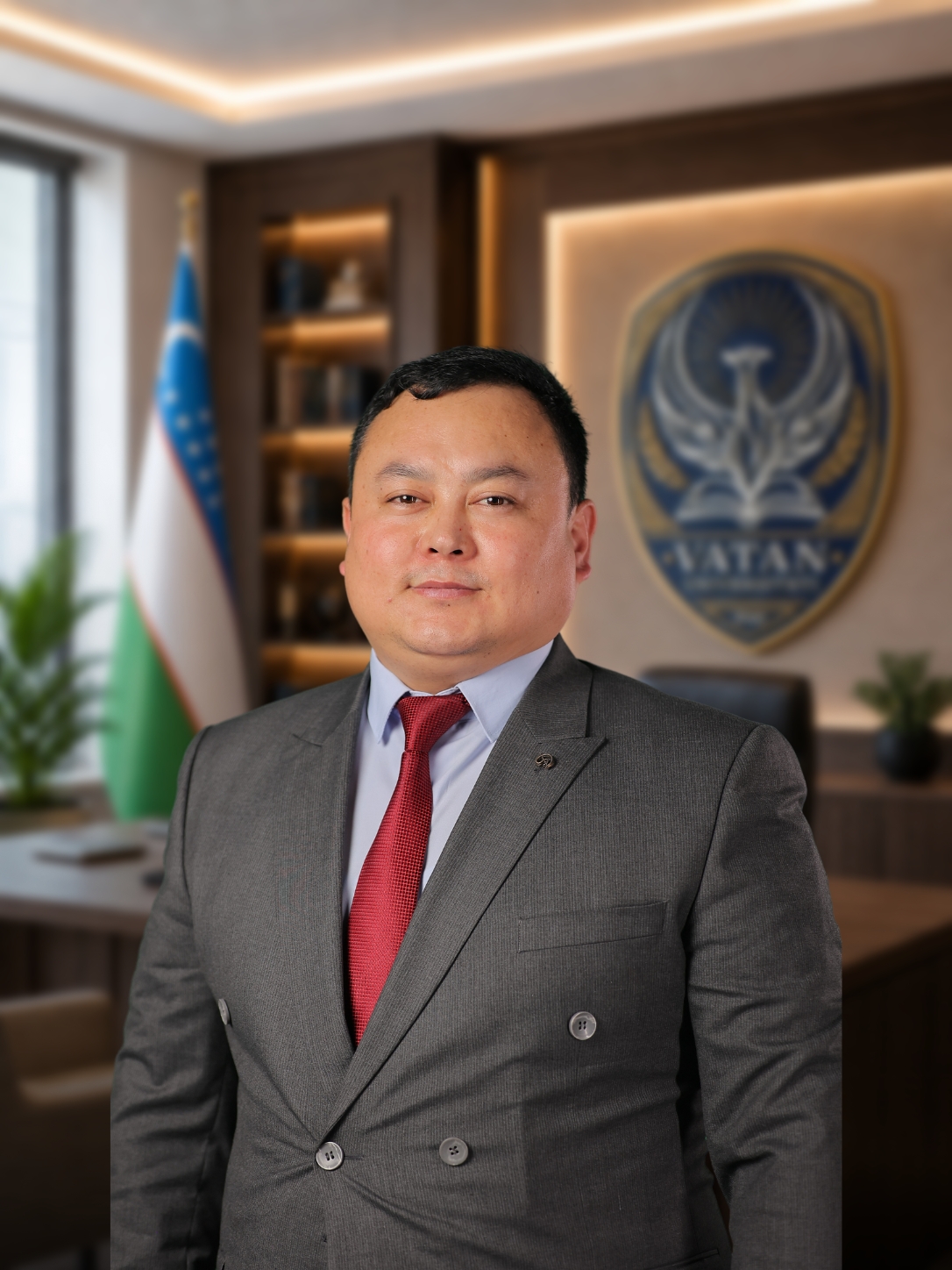
Department of Economics director
Mirzayev Muzaffar Maxmudovich
The main goal of the department is to train competitive economists who can deeply understand modern economic processes, who have mastered the theoretical and practical foundations of economic analysis and management, and who are innovative thinkers, as well as to develop scientific research in line with the priority directions of the country's economic policy.
The department's activities are organized to make a scientific and practical contribution to the strategic goals of the Republic of Uzbekistan, including sustainable economic growth, structural reforms, transition to the digital economy, and modernization of the socio-economic system.
The department aims to form in-depth scientific knowledge in the fundamental theoretical foundations of economic sciences, in particular microeconomics and macroeconomics, institutional economics, international economic relations, and innovation management. Developing students' skills in systematic analysis of economic processes, economic modeling and forecasting is among the department's priority tasks.
Scientific research conducted within the department is aimed at increasing the effectiveness of economic reforms, strengthening the competitiveness of the national economy, ensuring economic security, and studying the theoretical and practical aspects of innovative development. The results of research are integrated into the educational process and applied in the form of practical recommendations to the real sectors of the economy.
Based on modern educational technologies, the department envisages forming a culture of economic thinking and developing analytical and strategic decision-making skills. Students are also given advanced knowledge on using economic information systems, analyzing data in the digital economy, building economic models and interpreting results.
In the department's activities, introducing new methods of economic analysis, artificial intelligence, big data technologies, digital economic modeling and forecasting methods plays an important role. This makes it possible to develop effective mechanisms for managing economic processes.
The department establishes cooperation with public and private sectors, international organizations, banking and financial institutions, and business entities, aiming to integrate scientific research with practice. Through this, analytical reports, expert conclusions and recommendations on current issues of economic policy are prepared.
The department sets as its main task the training of economist personnel who meet the modern requirements of the country's economy, based on the close integration of education, research and practical activity. The department's activities are aimed not only at providing theoretical knowledge, but also at forming students' analytical thinking, economic modeling and management skills.
1. Educational and methodological tasks
- Improving the curricula and programs of economic disciplines based on the requirements of the time.
- Teaching students the theoretical and practical foundations of the economy in depth, and forming skills in economic analysis, forecasting and strategic planning.
- Effectively using advanced pedagogical technologies, digital learning platforms and interactive methods in the educational process.
- Creating textbooks, study guides and scientific-methodological materials in economic disciplines based on domestic and foreign experience.
2. Scientific research and innovation tasks
- Conducting in-depth studies of economic processes and scientific research on priority directions of the national economy.
- Harmonizing the scientific activities of department members and master's students with innovative approaches, and supporting fundamental and applied research.
- Implementing scientific research projects in current areas such as the digital economy, green economy, financial stability and investment policy.
- Publishing research results in scientific articles, monographs, conference materials and internationally rated journals.
3. Practical and organizational-managerial tasks
- Directing the department's activities toward integrating education and practice, and strengthening cooperation with industrial enterprises, banks and state organizations.
- Organizing student internships and involving students in analyzing real economic problems.
- Improving the qualifications of the department's professors and teachers, and studying and introducing foreign experience.
- Ensuring the exchange of scientific and practical experience through economic events, seminars, round tables and trainings.
4. Tasks of personnel training and enhancing scientific potential
- Improving the quality of subjects taught at the bachelor's, master's and doctoral levels, and combining them with scientific research work.
- Involving young researchers in scientific activity and developing their ability for independent analytical thinking.
- Training the department's teaching staff in modern economic analysis methods, digital technologies and modeling techniques.
- Improving the system of scientific supervision and enhancing the quality of dissertation research.
5. Tasks serving regional and national economic development
- Developing scientifically grounded proposals and recommendations for improving Uzbekistan's economic policy.
- Analyzing the economic potential of regions and applying scientific approaches in evaluating investment projects.
- Carrying out economic analyses, expertise and consulting services in cooperation with state bodies, business entities and non-governmental organizations.
Bachelor's level: Economic Theory, Microeconomics, Macroeconomics, Fundamentals of Economic Analysis, Economic Statistics, Economic Modeling and Forecasting, Econometrics, Economy of Uzbekistan, Accounting, Fundamentals of Management, Strategic Management, Business Planning, Innovation Management, Economics and Management of Industries, Project Management, Digital Technologies and Economy, Application of Artificial Intelligence in Economy, Big Data Analysis and Economic Decisions, E-commerce, Economic Information Systems, Integration of Digital Payment Systems, Institutional Economics, Financial Economics, Economic Security, Financial Systems and Crises, Portfolio Theory and Financial Markets, International Finance, Financial Technologies, Financial Risks
Master's level: Research Methodology, Information Search and Retrieval, Innovation and Project Management, Algorithm Design and Analysis, Artificial Intelligence and Neural Networks, Digital Economy, Fundamentals of E-business, Applied Econometrics, Risk Management in the Digital Economy, Digital Economic Security, and others.
No staff information has been posted yet
Gallery photos have not been posted yet
Documents have not been posted yet
Departments have not been posted yet